

D03 /DIRECTIONALRIDGE.
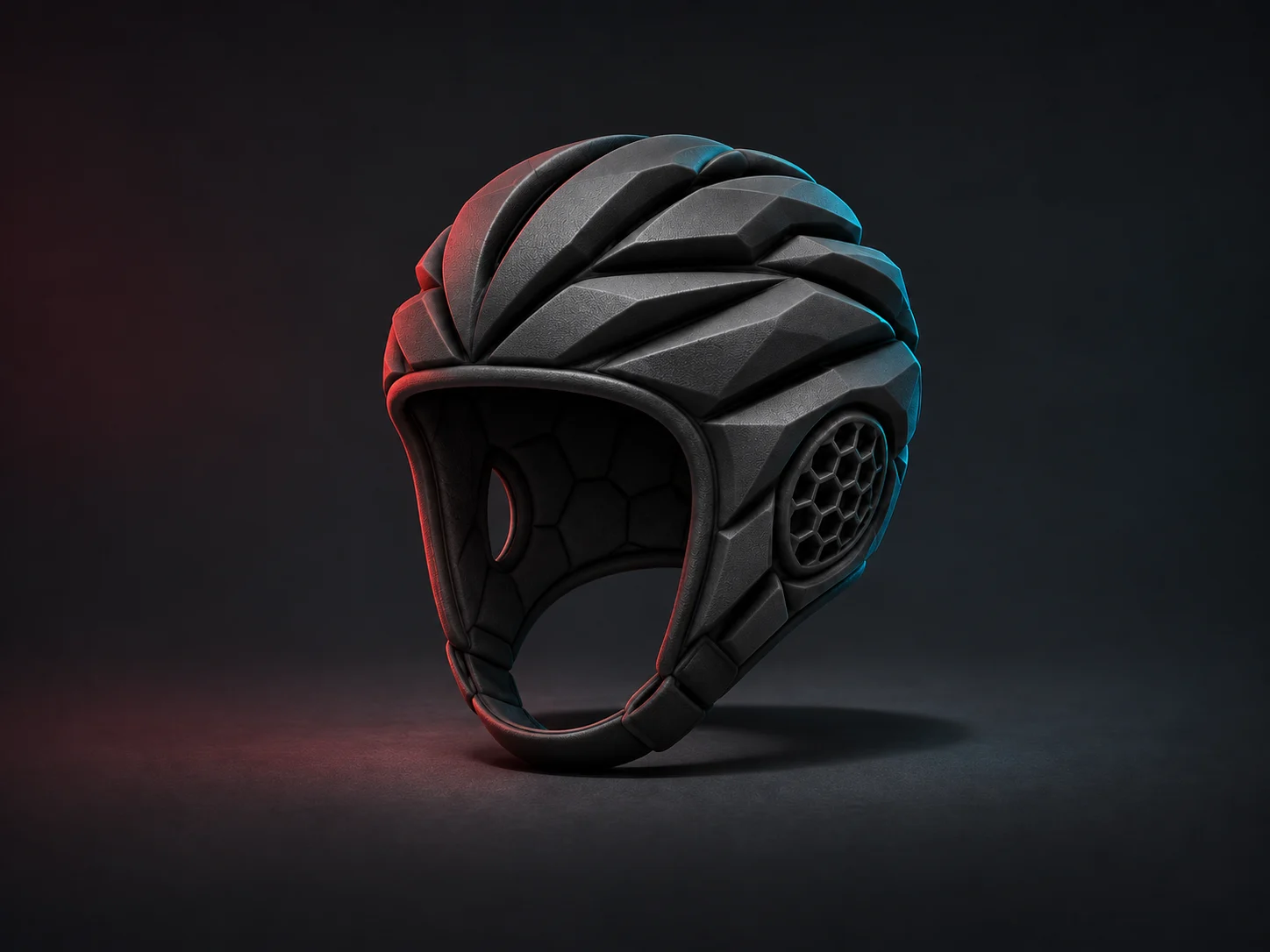
D03 Directional Ridge is our first soft, shell-free rugby headguard design in development, with sculpted ridges and open ear geometry.
EXPLORE THE DESIGN ↗COMPUTATIONALDESIGN.PHYSICAL AMBITION.
D03 is our first product direction: computationally defined soft geometry, sculpted ridges and an expressive visual language. We’re exploring architected material structures and digital manufacturing routes to bring that design into physical form. D03 is in development and is not yet available to buy.
- 01 / MECHANICSDevelop geometry to manage deformation and measure its response under impact.
- 02 / THE PLAYERMake fit, comfort and the demands of rugby part of the design brief.
- 03 / INTEGRATIONIntegrate SPM and the protective foundation as distinct functions of one continuous soft structure.

VIEWS OF
THE OBJECT.
Explore D03 Directional Ridge, Impact Mechanica’s selected rugby headguard design.
CURRENT VIEW 01 / FRONT THREE-QUARTER
LOOK
CLOSER.
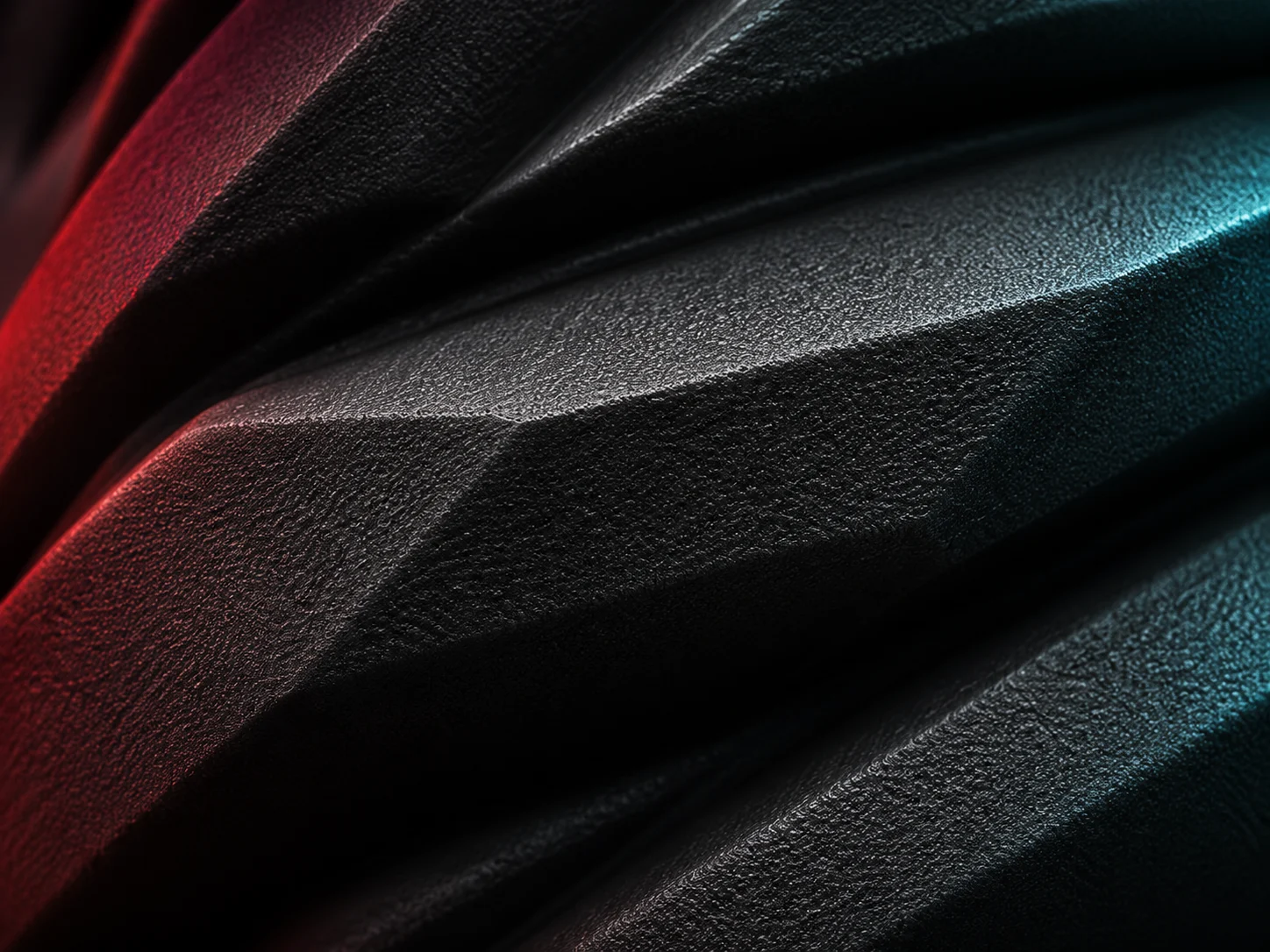
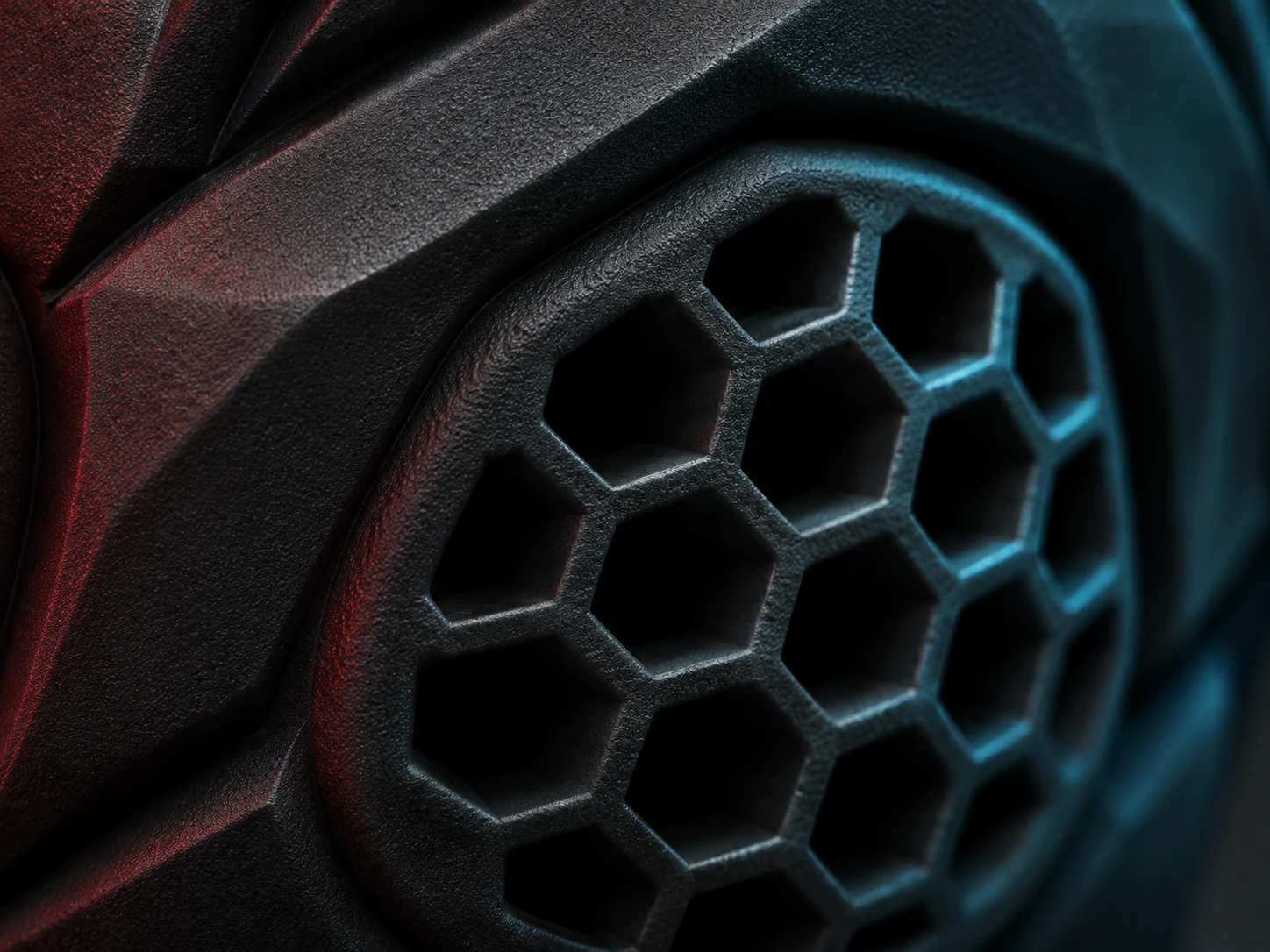
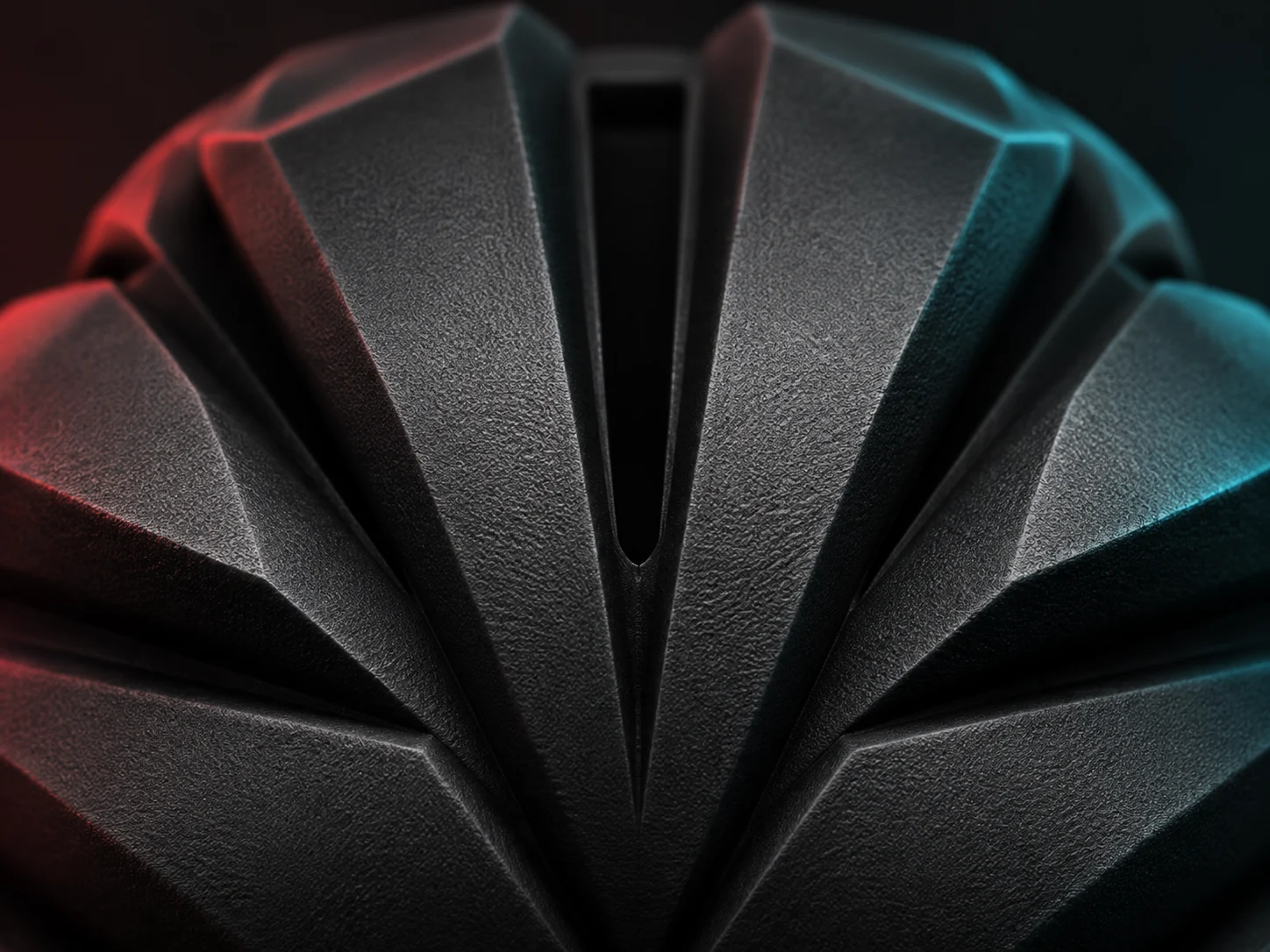
Visual studies of the directional ridges, ear lattice, crown convergence and surface texture.
SOFT.
SHELL-FREE.
BUILT AROUND RUGBY.
The design brief starts with rugby: secure fit, comfort, hearing, vision and contact with other players. Planned physical tests will assess the complete headguard.
DESIGNED AROUND THE DEMANDS OF RUGBYTO
PHYSICAL
TESTS.
Digital geometry
We have generated and checked digital headguard geometry for a defined configuration. The next stages connect that geometry to materials, manufacture and physical evaluation.
Impact response and recovery
Physical tests will measure impact response, deformation and recovery after repeated loading. We will compare the protective foundation with versions that include Soft Programmable Morphology to understand how the regions interact.
The complete headguard
Whole-headguard evaluation will cover mass, fit, retention, comfort, ventilation, hearing, vision and player contact.
TrueContourAI.
From anatomy to intelligent design.
TrueContourAI is our separately developed head-scanning application. Our ambition is to turn anatomical information into useful design inputs. Future AI-assisted interpretation could help connect digital head shape, anatomical modelling and individually informed fit to product design and manufacturing.
Scan accuracy, anatomical boundary definition and scan-to-CAD integration remain under development.EXPLORE TRUECONTOURAI ↗WHAT
YOU
SHOULD
KNOW.
Direct answers about D03’s development, testing, match-use eligibility and availability.
Can the headguard prevent concussion?
No concussion-prevention benefit has been demonstrated for D03. Mechanical impact-response tests would not, by themselves, establish a reduction in diagnosed concussion, other brain injury or CTE.
How is D03 designed to differ from conventional headgear?
The D03 design combines a protective foundation, deformation space and expressive SPM within one continuous architecture. Its mechanical response and any advantage over existing headgear will be determined through physical testing.
Why study headguard thickness?
Additional thickness may create more space for deformation, but more material does not automatically mean better protection. Any benefit must be weighed against mass, coverage, comfort and interaction with other players. Designs outside ordinary equipment specifications need an appropriate regulatory pathway.
Which materials are you exploring?
We are exploring soft foams and cellular structures. Physical evaluation will determine the material composition, manufacturing approach and mechanical response. The reference specimen shown on Engineering is external, not a tested D03 prototype.
Is the design approved for rugby match use?
No World Rugby approval or match-use eligibility is claimed. The standard headgear specification limits uncompressed overall thickness to 12 mm, including surface fabrics. World Rugby also describes a separate headgear trial, but its published exceptions do not expressly waive the thickness limit. No route for a thicker Impact Mechanica design has been confirmed. World Rugby specification · Headgear trial
Is the product commercially available?
D03 is not available to buy. Material qualification, manufacture, fit, protective performance and match-use eligibility remain in development.
How could future customisation work?
Our aim is to define surface, shape and fit digitally before manufacture, within tested design limits. A scan-to-headguard service is not currently available.
What will physical testing evaluate?
The planned programme evaluates material behaviour, impact response, repeated loading, recovery, durability and manufacturing consistency. Whole-headguard tests will address retention, fit, ventilation, hearing, vision and contact with other players.
How will durability and cleaning be evaluated?
The development programme covers repeated use, hygiene, cleaning and environmental exposure. Care instructions will be developed once the materials and headguard design have been tested.