

EXPRESSIVESTRUCTURESFOR SOFTPROTECTION.
Soft Programmable Morphology is our approach to expressive compliant geometry within a continuous soft protective structure. We envision computational and generative engineering tools expanding how these forms are designed and integrated.
EXPLORE SPM ↗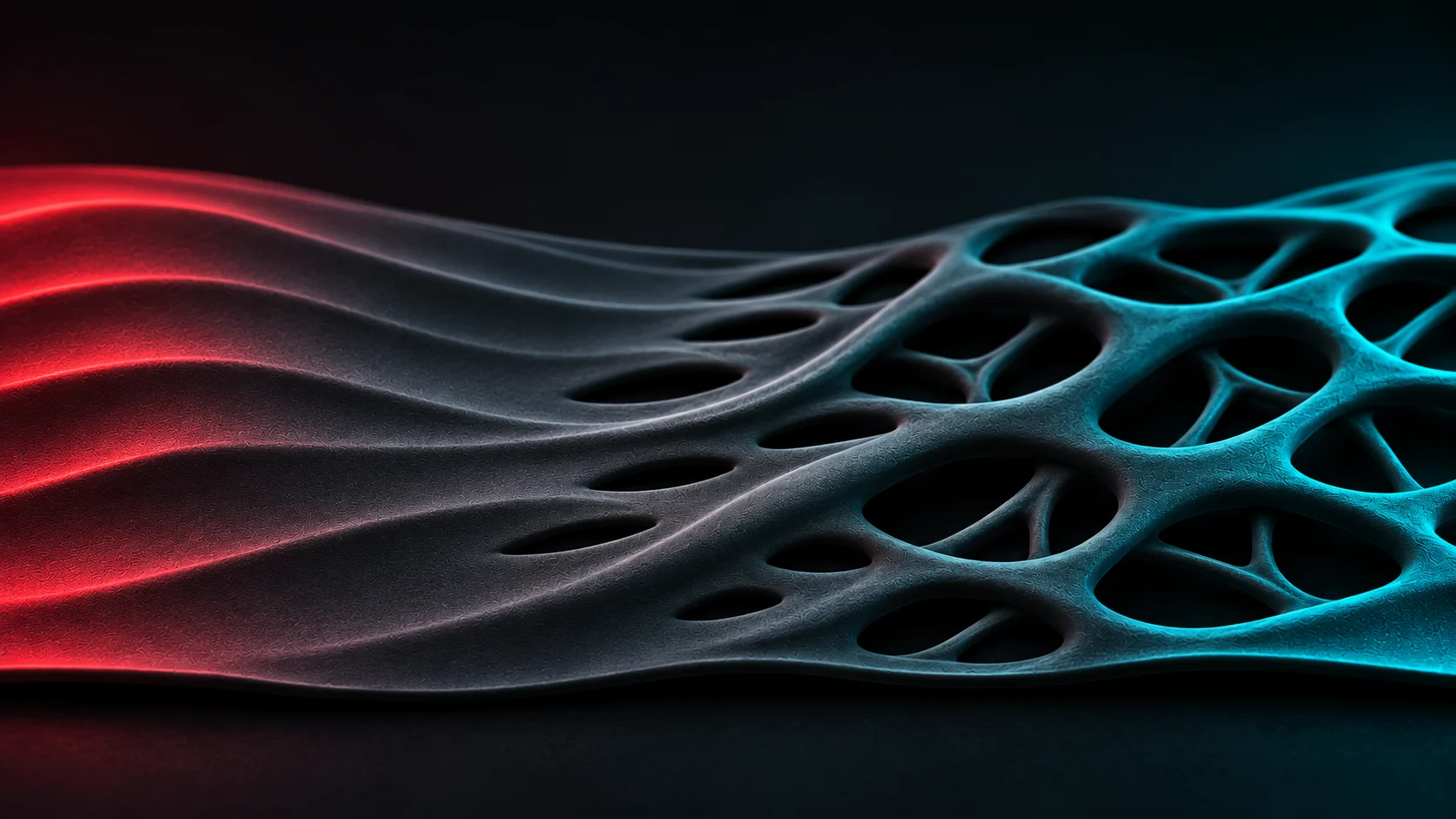
FROM
FORM
TO
FUNCTION.
Surface, silhouette and the transition into the protective foundation are designed together.
A NEW
design
LANGUAGE
FOR SOFT
PROTECTION.
SPM / DESIGN IN DEVELOPMENT
Expression by design.
Headgear can have a distinctive visual identity. SPM is our approach to shaping compliant surfaces and silhouettes. We’re exploring how these design choices could support future personalisation before manufacture.
Design for player choice.
Player research will examine how differences in shape and surface affect comfort, movement, awareness and willingness to wear the headguard.
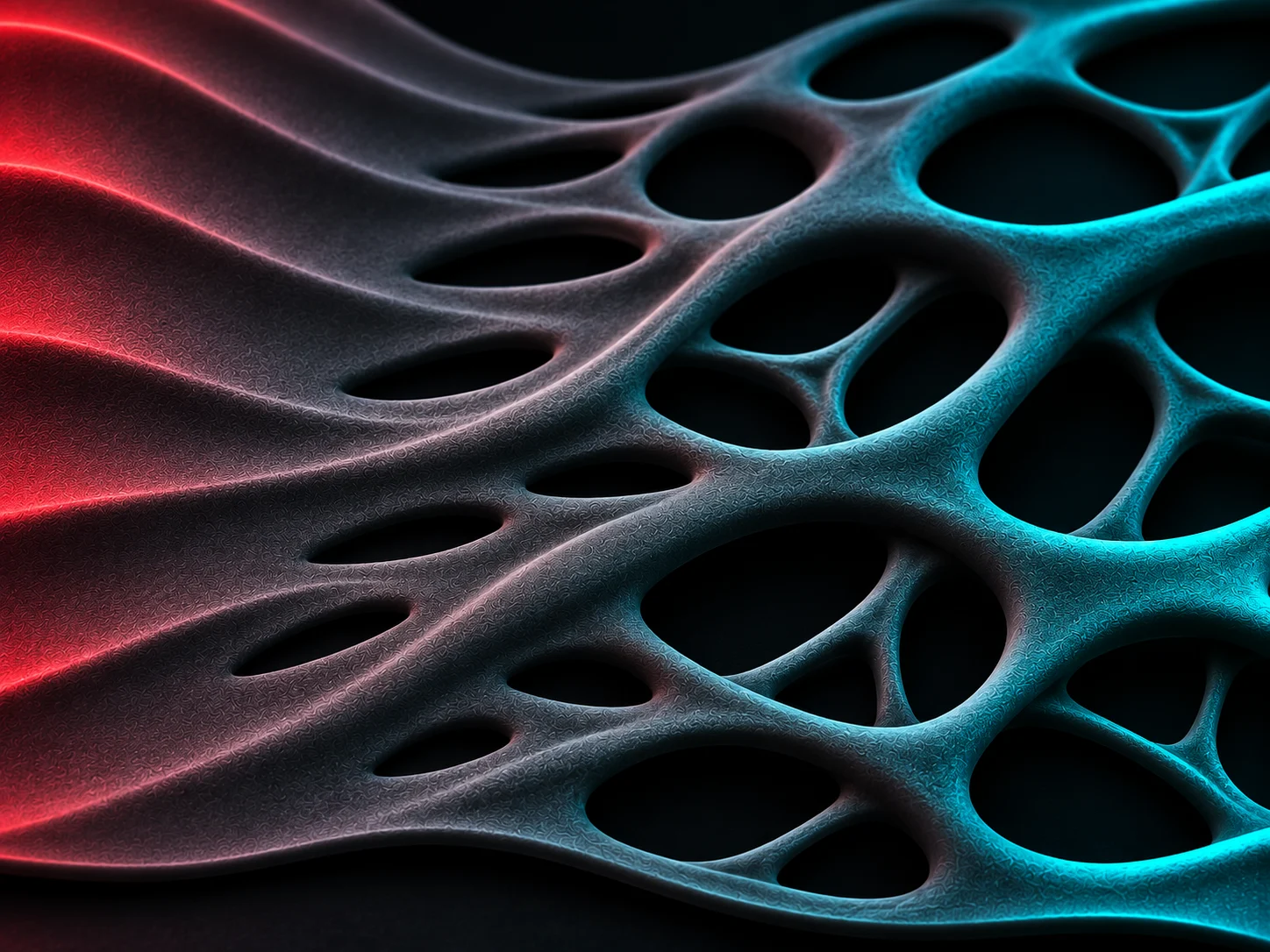
Expressive geometry and the protective foundation are functional regions of the same continuous structure.
TWO
ROLES.
ONE
STRUCTURE.
We are developing the connection between expressive geometry and the protective foundation as part of the whole headguard.
 SPM / DESIGN STUDY
DESIGN
INTENTION.
Expression
We can explore different silhouettes, surfaces and textures. Player research will help us understand which choices matter in use.
Impact management
The foundation is designed around mechanical deformation and load response. Physical testing will measure its behaviour.
Planned tests compare the foundation alone with SPM-integrated variants to measure how the transition changes load paths and deformation.
SEE THE IMPACT RESPONSE TEST PLAN↗ENGINEERING
FORM.
Exploring
FUNCTION.
Architecture shapes behaviour.
Architected materials derive mechanical behaviour from geometry as well as the material they are made from. Cell shape, connections and available deformation space can all influence how a soft structure responds to load.
Mechanical metamaterials: a research direction.
We see an opportunity to investigate mechanical metamaterials, where deliberately designed internal structures enable particular mechanical responses. For D03, the next step is physical evidence connecting geometry and materials to whole-headguard behaviour.
ONE
continuous
DESIGN.
Our future design tools could explore many compliant forms within mechanical and manufacturing limits. Generative engineering would help search that design space; inverse design could work back from defined targets to candidate geometries. Whole-headguard testing will assess how expressive and protective regions interact.